
Book A Free Consultation now
Book A Free Consultation now
Proudly Serving Dallas & Houston.
If you’re a U.S. citizen planning to marry a foreign national in the U.S., your fiancé would need to obtain a K1 visa with your help if they reside outside the U.S. Obtaining a K1 visa allows them to enter the U.S., get married (within a specific time), and transition into conditional green card holders through the adjustment of status process.
The I-129F petition for alien fiancé is the foundation of the K1 visa application process. As the (U.S. citizen) fiancé, you’ll need to file this petition on behalf of your fiancé with the United States Citizenship and Immigration Services (USCIS) to kickstart the process. It also plays a vital role for K3 visa applicants, helping spouses of U.S. citizens qualify for entry as they await the availability of an immigrant visa.
A K1 Visa Immigration Lawyer from Andrew T. Thomas, Attorneys at Law, can help you get started. This guide clarifies key legal requirements and helps you understand what to expect during the process.
The I-129F petition is a versatile and useful document in certain family-based immigration applications. It is used to initiate K visa applications in the following circumstances:
To enable the alien fiance of a U.S. citizen to enter the U.S. as a K-1 nonimmigrant so they can get married in the U.S.
To enable the spouse of a U.S. citizen to qualify as a K-3 nonimmigrant and enter the U.S. to await the availability of an immigrant visa.
Unmarried minor children of K1 and K3 visa applicants above may apply for nonimmigrant K2 or K4 visas, respectively, on the strength of the I-129F petition filed for their parents.
Form I-129F can be filed only by a U.S. citizen in favor of their spouse or fiancee. The petition is unavailable to lawful permanent residents and their fiancé/spouses.
If you are a green card holder, you may need to seek alternative ways to bring your loved ones to the U.S. since you do not qualify for this procedure. An immigration lawyer can help you identify and explore the available immigration pathways that could help you fulfill your wishes.
Before filing the petition as a U.S., you and your partner (fiancée or spouse)must meet certain requirements, including the following.
If you are applying for your spouse, your marriage must be legally recognized.
If you are petitioning for your foreign fiancee, you both must be legally free to marry. That means you both must not be married to other people. If any of you were previously married, the previous marriage must have ended in death or divorce.
You and your fiancé must have met in person at least once within two years before the petition is filed. However, this requirement may be dispensed with if such a meeting would violate long-standing customs in your foreign fiancé’s culture or result in extreme hardship to you.
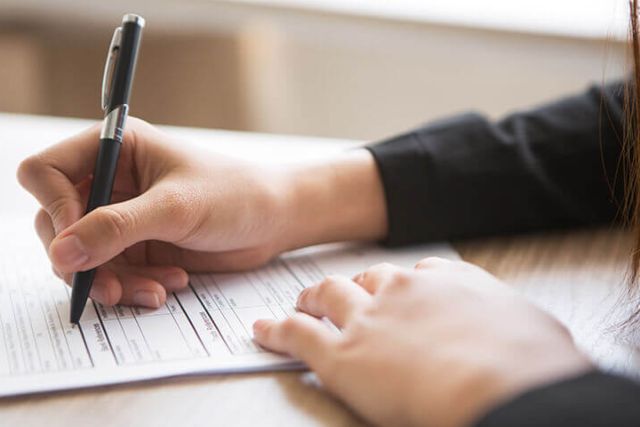
A copy of Form I-129F can be downloaded online through the United States Citizenship and Immigration Services (USCIS) website. You’ll need to complete the form and provide all the information required. Mistakes at this point could jeopardize the outcome of the petition, so you must exercise caution and ensure that the details you include in the form are correct.
The form must be completed or typed in black ink and signed appropriately. The USCIs do not accept a stamped or typewritten name instead of a signature.
Your petition must be accompanied by certain documents that verify the information you’ve included in the form. Some of the documents you’ll need include the following:
Passport-size pictures of you and your fiance or spouse taken within 30 days from when the petition is filed
Proof of your U.S. citizenship, such as your birth certificate
Documents proving the relationship between beneficiary and petitioner.
Evidence of changed legal name (if applicable)
Evidence of termination of past marriages (if applicable)
If filing for your fiancé, provide evidence that you intend to get married within 90 days of their entry into the U.S.
Proof that you and your fiancée have met in the last two years or that you qualify for the cultural or extreme hardship exemption
Your marriage certificate if applying for your spouse.
The supporting documents must be submitted to the USCIS along with your form. If you fail to submit them, your petition may be rejected or denied, and you may need to begin the process afresh.
You must not submit original documents to the USCIS unless they specifically request them. What you need to submit is copies of the required documents. If you submit your original documents, the USCIS may destroy them upon receipt.
The I-129F petition attracts a filing fee of $535 when applying for a foreign fiancee. You do not need to pay the fee if you’re applying for a spouse.
Once you’ve paid the fees, you’ll need to forward the completed form, supporting documents, and evidence of payment to the designated USCIS filing address in Texas.
After submitting the application, you’ll receive a filing receipt and a notice for a biometrics appointment in the mail. The USCIS will review your application for completion and may contact you for any additional information or documents required.
You may also be scheduled for a biometric services interview to verify your identity. Attendance is mandatory, as your petition may be denied otherwise.
Once they have all the necessary information, the USCIS will process your petition and notify you of their decision in writing. If the petition is approved, you’ll need to send your fiance or spouse a copy so they can begin the next phase: the online nonimmigrant visa application.
Your petition will likely be granted if you can establish the relationship between you and the prospective immigrants and if there are no errors or inaccuracies with your petition. That’s why you must do all you can to ensure that such issues do not arise, including seeking professional help from skilled immigration attorneys.
Filing the I-129F petition can feel overwhelming, especially if you’re unfamiliar with immigration law or the specific procedures involved. Delays and denials often arise due to missing information, incorrect documents, or not meeting the eligibility requirements. Knowing these challenges in advance can help you avoid potential pitfalls:
Addressing these challenges requires careful preparation and expert guidance. An immigration lawyer can clarify the process and ensure your petition has the best chance of success.
Once your fiancé enters the U.S. and the marriage takes place within the 90-day timeframe, the next step is filing for an adjustment of status to register permanent residence. This process transitions your spouse from a temporary K-1 visa holder to a conditional green card holder.
Here’s what you need to know about this critical stage:
Successfully navigating the I-129F petition and adjustment of status process is essential to uniting with your loved one in the U.S. By staying informed and seeking professional help, you can overcome hurdles and secure the future you envision.
An immigration lawyer is an invaluable asset when it comes to I-129F petitions and dealing with the USCIS. They understand the intricacies of the immigration process and can help you avoid the errors and mistakes that lead to denials.
They can also help you identify the documents needed to strengthen your application and help you get things right from the get-go. That way, you can be sure that your application meets the requirements and is not likely to be denied.
It can be frustrating to have a huge hindrance in being with your (future) spouse. This is why it’s crucial to avoid all possible causes of delay in getting the much-coveted K1/K3 visa.
At Andrew T. Thomas, Attorneys at Law, our K1 and K-3 Nonimmigrant Visa Lawyers understand the issues that could arise with I-129F petitions in the K-visa application process. We can represent and guide you so you can easily navigate the system and overcome the hurdles keeping you from getting an approved petition and being with your loved one.
Contact us for help today. We’d be glad to support you as you strive to begin your future with your fiance(spouse) in the U.S.